data-driven world, organizations rely heavily on data analytics to make informed business decisions. Every digital interaction, transaction, and operational process generates data. However, raw data on its own has little value unless it is transformed into a structured, reliable, and understandable form. This transformation process is where dbt, or data build tool, plays a crucial role.
dbt is an open-source transformation tool designed specifically for analytics engineering. It enables data teams to transform raw data stored in modern data warehouses into analytics-ready datasets using SQL. Unlike traditional tools that handle extraction, transformation, and loading all together, dbt focuses only on the transformation layer. This clear separation of responsibilities makes data workflows cleaner, faster, and easier to maintain.
Over the past few years, dbt has become one of the most widely adopted tools in the data analytics ecosystem. Companies of all sizes, from startups to large enterprises, use dbt to standardize data transformations, improve data quality, and increase trust in analytics outputs.
Understanding the Role of dbt in the Modern Data Stack
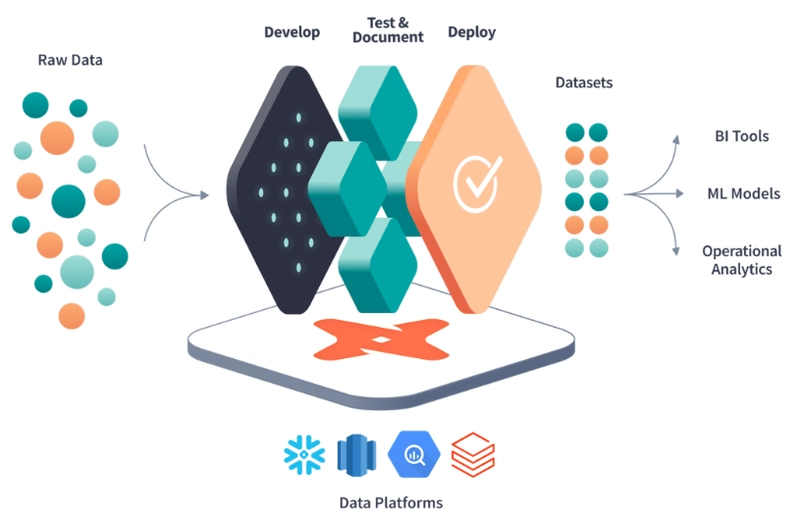
To understand why dbt is so important, it helps to look at the modern data stack. A typical modern data stack includes data sources, ingestion tools, a cloud data warehouse, a transformation layer, and analytics or visualization tools. dbt sits squarely in the transformation layer.
Data ingestion tools are responsible for extracting data from source systems and loading it into a data warehouse. Once the data is loaded, it often exists in a raw, uncleaned state. Tables may contain inconsistent naming, duplicated records, missing values, or unclear business logic. dbt is used at this stage to clean, join, aggregate, and reshape the data into models that are ready for reporting and analysis.
Because dbt runs transformations directly inside the data warehouse, it takes full advantage of the warehouse’s processing power. This eliminates the need for complex external transformation servers and reduces infrastructure overhead. As cloud data warehouses continue to become more powerful and cost-effective, dbt’s approach aligns perfectly with modern analytics needs.
What Exactly Is dbt?
dbt is a command-line tool and development framework that allows data professionals to write SQL-based transformations as code. These transformations are saved as models, which dbt compiles and executes in the target data warehouse. Each model typically represents a table or view that can be used by downstream users.
What makes dbt unique is not just that it runs SQL transformations, but that it wraps SQL with software engineering best practices. dbt projects are version-controlled, modular, testable, and well-documented. This approach brings discipline and structure to analytics work, which has traditionally been ad hoc and loosely managed.
In dbt, transformations are defined declaratively. Instead of telling the system how to run each step manually, users define what the final data should look like. dbt then determines the execution order based on dependencies between models. This makes workflows easier to understand and reduces the likelihood of human error.
Why dbt Was Created
Before dbt existed, data transformations were often handled by data engineers using custom scripts, ETL tools, or stored procedures. These transformations were typically complex, difficult to debug, and poorly documented. Analysts often had limited visibility into how data was produced, which led to confusion and mistrust.
dbt was created to solve this problem by empowering analysts and analytics engineers to own the transformation layer. By using SQL, a language already familiar to most data professionals, dbt lowered the barrier to entry for building reliable data pipelines. At the same time, it introduced structure, testing, and documentation to analytics work.
The creators of dbt recognized that analytics code is still code, and it should be treated with the same care as application code. This philosophy is one of the main reasons dbt has gained widespread adoption.
The Shift from ETL to ELT
One of the most important concepts behind dbt is the shift from ETL to ELT. In traditional ETL pipelines, data is transformed before it is loaded into the data warehouse. This approach requires separate transformation infrastructure and often leads to performance bottlenecks.
ELT approach, data is first loaded into the warehouse in its raw form. Transformations are then applied inside the warehouse. dbt is built specifically for ELT workflows. It assumes that raw data already exists in the warehouse and focuses entirely on transforming that data into useful structures.
This shift has several advantages. It simplifies data pipelines, reduces infrastructure complexity, and allows teams to leverage the scalability of modern data warehouses. It also makes raw data more accessible, enabling teams to reprocess or re-transform data as business requirements change.
dbt Models and Transformations
At the heart of dbt are models. A dbt model is essentially a SQL query saved as a file. When dbt runs, it executes these queries in the warehouse and materializes the results as tables or views. Models can reference other models, creating a logical flow of transformations from raw data to final analytics tables.
This model-based approach encourages modular design. Instead of writing large, complex SQL queries, users can break transformations into smaller, reusable pieces. This makes code easier to read, test, and maintain. It also allows teams to build standardized layers such as staging, intermediate, and mart models.
By structuring transformations in this way, dbt helps ensure consistency across analytics use cases. Metrics and dimensions are defined once and reused everywhere, reducing discrepancies between reports and dashboards.
Why dbt Is Important for Data Quality
Data quality is a major concern in data analytics. Poor data quality leads to incorrect insights, wasted time, and loss of trust among stakeholders. dbt addresses this problem by making data quality a first-class concern.
dbt includes built-in testing capabilities that allow users to define expectations about their data. These tests can check for conditions such as uniqueness, non-null values, and referential integrity. Tests are run automatically as part of dbt workflows, making it easier to catch issues early.
In addition to tests, dbt encourages transparency through documentation. Each model, column, and transformation can be documented directly in the dbt project. This documentation can be automatically generated and shared with the entire organization. As a result, everyone understands where data comes from and how it is transformed.
dbt Architecture and Core Components
dbt Project Structure
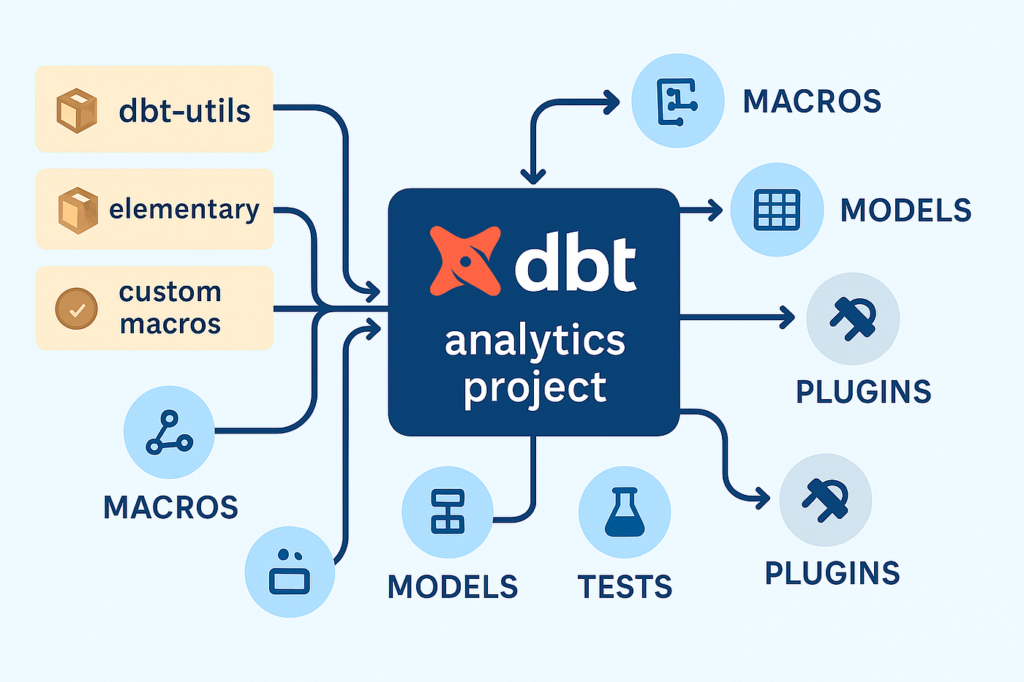
A dbt project is organized in a clear and logical structure that makes analytics code easy to manage and scale. At the highest level, a dbt project contains folders for models, tests, macros, documentation, and configuration files. This structure enforces consistency and encourages best practices across teams.
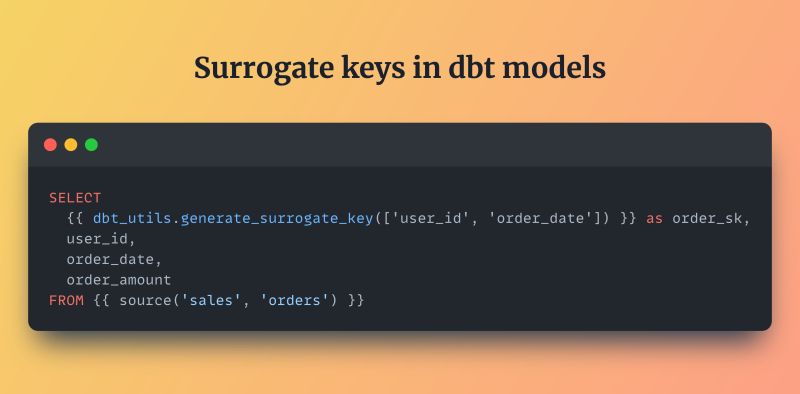
Models are stored as SQL files and represent transformations applied to raw data. Tests are defined to validate data quality and business rules. Macros allow users to reuse SQL logic and apply dynamic behavior to models. Configuration files define how models are materialized and how the project connects to the data warehouse.
This standardized structure is one of the reasons dbt is so effective in collaborative environments. New team members can quickly understand how data transformations work, and teams can grow without creating chaos in their analytics pipelines.
How dbt Compiles and Runs Code
When dbt runs, it does not execute SQL files directly as written. Instead, it first compiles the SQL by resolving references between models, applying macros, and injecting configuration settings. The compiled SQL is then executed in the data warehouse.
This compilation step is important because it allows dbt to understand dependencies between models. If one model depends on another, dbt ensures that the upstream model is built first. This automatic dependency management removes the need for manual scheduling and reduces operational complexity.
Because dbt runs transformations inside the data warehouse, it relies on the warehouse’s execution engine. This means performance scales with the warehouse, making dbt suitable for both small and very large datasets.
dbt Materializations
Materializations define how dbt models are stored in the data warehouse. Common materializations include views, tables, incremental models, and ephemeral models. Each materialization serves a different purpose depending on performance, cost, and data freshness requirements.
Views are useful for lightweight transformations that always reflect the latest data. Tables are better for heavy transformations that are expensive to compute repeatedly. Incremental models allow dbt to process only new or changed data, which significantly improves performance for large datasets.
By giving teams control over materializations, dbt allows them to optimize analytics workflows without rewriting SQL logic. This flexibility is a key reason dbt is widely adopted in production analytics environments.
How dbt Fits into Real-World Analytics Workflows
The Analytics Engineering Workflow
dbt is central to the role of the analytics engineer. Analytics engineers are responsible for transforming raw data into models that are easy to use for analysis and reporting. They work closely with data engineers, analysts, and business stakeholders to define metrics and data structures.
In a typical workflow, raw data is loaded into the warehouse by ingestion tools. dbt then transforms this raw data into staging models that clean and standardize the data. Intermediate models apply business logic and joins. Final models, often called marts, are optimized for reporting and dashboards.
This layered approach makes analytics workflows more reliable and easier to maintain. Changes can be made in one layer without breaking everything downstream, and business logic is clearly separated from raw data processing.
Collaboration and Version Control
One of the biggest challenges in analytics teams is collaboration. Without proper tooling, multiple analysts may define the same metric differently or overwrite each other’s work. dbt solves this problem by integrating tightly with version control systems like Git.
All dbt code is stored as files, which means changes can be tracked, reviewed, and approved through pull requests. This introduces accountability and quality control into analytics workflows. Teams can review transformations before they are deployed, reducing the risk of errors.
Version control also enables experimentation. Analysts can create branches, test new logic, and merge changes once they are validated. This is a major improvement over traditional approaches where changes are often made directly in production.
Deployment and Environments
dbt supports multiple environments, such as development, staging, and production. This allows teams to test transformations safely before deploying them to production. Developers can run dbt locally to validate logic, while automated jobs run dbt in production on a schedule.
This separation of environments is critical for maintaining data reliability. It ensures that incomplete or incorrect transformations do not impact business users. dbt’s environment management makes analytics workflows more robust and enterprise-ready.
dbt vs Traditional ETL Tools
Limitations of Traditional ETL Tools
Traditional ETL tools are often complex and expensive. They typically rely on graphical interfaces that hide logic behind configuration screens. While this can be convenient for simple use cases, it becomes a problem as pipelines grow in complexity.
ETL tools often require specialized skills and dedicated infrastructure. Debugging issues can be difficult because logic is not transparent. Documentation is usually separate from the code, which leads to outdated or missing explanations.
Another major limitation is scalability. As data volumes increase, traditional ETL pipelines can become slow and costly to maintain. This makes them less suitable for modern, cloud-based analytics.
Advantages of dbt Over ETL Tools
dbt takes a fundamentally different approach. Instead of abstracting logic behind visual interfaces, dbt makes transformations explicit and transparent through SQL. This makes it easier to understand, debug, and modify analytics code.
Because dbt focuses only on transformations, it integrates seamlessly with best-in-class ingestion tools. Each tool does one job well, resulting in a more flexible and scalable architecture. Teams can replace or upgrade components without redesigning the entire pipeline.
dbt also promotes ownership and accountability. Analytics engineers own the transformation logic, tests, and documentation. This leads to higher-quality data and greater trust in analytics outputs.
The Role of Analytics Engineers in dbt
Bridging the Gap Between Data and Business
Analytics engineers play a critical role in organizations that use dbt. They translate business requirements into data models that are easy to use and understand. By working closely with stakeholders, they ensure that metrics and definitions align with business goals.
dbt enables analytics engineers to focus on modeling and logic rather than infrastructure. This increases productivity and allows teams to deliver insights faster. As a result, businesses can make decisions based on reliable, up-to-date data.
Standardizing Metrics and Definitions
One of the biggest challenges in analytics is metric inconsistency. Different teams may calculate the same metric in different ways, leading to confusion and mistrust. dbt addresses this issue by centralizing metric definitions in code.
By defining metrics once and reusing them across dashboards and reports, dbt ensures consistency. Tests and documentation further reinforce this consistency, making it clear how metrics are calculated and what data they rely on.
Conclusion
dbt has become a foundational tool in modern data analytics because it directly addresses the challenges of transforming raw data into trustworthy, analytics-ready information. By focusing exclusively on the transformation layer and operating inside modern cloud data warehouses, dbt simplifies data pipelines while improving scalability and performance. Its SQL-first approach makes advanced analytics engineering accessible to a wide range of data professionals, allowing teams to apply software engineering best practices such as version control, testing, modular design, and documentation to analytics workflows.